Ballast Water Treatment Retrofit
A Ballast Water Treatment Retrofit is often the most practical way to restore confidence in ballast water operations on an existing vessel. When a ballast water treatment system no longer fits the vessel’s trading pattern, creates recurring maintenance issues or adds unnecessary complexity for the crew, replacement can be a better long-term decision than continuing to patch an underperforming installation. DESMI CompactClean is developed for both retrofit and newbuild projects and gives shipowners, operators and technical managers a retrofit-ready solution built around filtration and UV treatment, with strong attention to operational simplicity, installation flexibility and long-term support.
For many vessels, the issue is not only regulatory compliance. It is whether the installed system can operate reliably across real port conditions, fit the available machinery space, integrate with existing ballast arrangements and remain manageable for crews over time. That is where a well-engineered replacement project matters. DESMI supports ballast water treatment system retrofit projects with vessel-specific assessment, engineering, installation support, commissioning and lifecycle service, helping you select a replacement solution that matches both operational reality and approval requirements.
Ballast water treatment retrofit with DESMI CompactClean
Replacing an existing BWMS is not simply a product change. It is a retrofit project that must account for onboard space, ballast-pump capacity, electrical interfaces, pipe routing, access for service and the vessel’s actual trade. DESMI CompactClean is designed to support exactly that process. The system combines filtration and UV water treatment for ballast water and is available in configurations suited to retrofit conditions, where installation constraints are often the main challenge.


When is a ballast water treatment retrofit the right decision?
There is rarely a single trigger behind a ballast water treatment system retrofit. More often, the decision is driven by repeated operational friction. A system may still be in place, but recurring faults, poor spare-parts availability, sensor issues, frequent alarms or difficult maintenance routines start to consume too much time and attention. In that situation, replacement becomes a question of operational resilience as much as compliance.
Typical reasons for replacing an existing BWMS include:
Recurring faults or low operational availability
High maintenance demands and difficult service access
Complex operating modes that increase crew burden
Changed trading patterns compared with the original system design basis
Poor fit with the existing machinery space or ballast piping
Performance challenges in difficult water conditions, including low UV-T waters
Inadequate support, obsolete components or weak lifecycle visibility
For some vessels, the original system was installed primarily to meet an initial compliance deadline. Since then, the vessel may have changed routes, operating profile or port exposure. A ballast water treatment system that was acceptable at handover may no longer be well matched to the reality of current operations. In those cases, a replacement project can improve both practical operability and confidence during inspections.
A retrofit is also relevant when the system’s footprint, control philosophy or service demands create ongoing inefficiencies. If the crew struggles with mode selection, if alarms are poorly understood, or if the unit is difficult to maintain in the available space, the issue is no longer only technical. It affects the vessel’s day-to-day operation.
Compact design options for ballast water treatment retrofit projects
Retrofit projects are rarely limited by treatment capacity alone. In many cases, the decisive factor is whether the system can actually be integrated into an existing engine room, pump room or deckhouse arrangement without creating unnecessary disruption to existing systems. DESMI CompactClean is available in multiple installation formats to support different onboard constraints and vessel types.
Depending on the vessel and available footprint, CompactClean can be supplied as:

Loose components

Skid-mounted systems

Containerised or deckhouse solutions
Space constraints are only one part of the layout decision. Pipe routing, tie-in points, isolation possibilities, maintenance access and lifting routes for service also influence whether a given configuration will work well over time. DESMI addresses these factors during feasibility assessment and concept development so the final layout supports both installation and future operation.
Operational benefits of a well-matched ballast water treatment system retrofit
A well-matched retrofit should remove friction from normal ballast operations. That means the replacement system must do more than meet treatment requirements on paper. It should fit the pump capacity, control logic, operating sequence and crew workflow of the vessel. When that match is right, the operational benefits are visible in routine service rather than only during audits.
For many owners and crews, the value of replacing an older ballast water treatment system comes from simpler operation. CompactClean is based on automated control and a straightforward operating concept designed to reduce manual intervention. The absence of chemical treatment also removes tasks related to chemical handling, storage and associated safety considerations.
Key retrofit benefits can include:
Simpler daily operation with automated treatment sequences
Reduced crew workload and fewer manual operating steps
No chemical dosing or chemical storage onboard
Configuration aligned with actual ballast flow and vessel usage
Improved maintainability through better service access and layout
Clearer operational records and reporting for inspection support
Where applicable to the selected variant and operating basis, CompactClean can also support a global operating approach rather than separate system logic for different regulatory regions. That can be especially valuable on vessels trading internationally, where operational consistency matters for both crew confidence and procedural reliability. Final operating claims should always be aligned with the chosen CompactClean variant, the relevant approval basis and the vessel’s intended service.
To compare available system options, see the CompactClean ballast water management system overview and related ballast water management solutions.
Ballast water management customer stories


Engineering and integration support for ballast water treatment retrofit
A successful retrofit depends on engineering quality as much as equipment choice. Existing vessels present real integration constraints: limited access, legacy pipework, non-standard modifications, class considerations and electrical interfaces that may differ significantly from the original drawings. DESMI supports ballast water treatment retrofit services with a structured engineering process intended to reduce integration risk and improve project clarity from the outset.
The retrofit process may include:
Onboard inspection of the existing installation area
3D laser scanning for accurate spatial modelling
Tie-in and ballast piping analysis
Review of bypass logic and system interfaces
Concept development and 3D layout proposals
Installation and fabrication drawings
Electrical diagrams and control documentation
Commissioning support and crew training
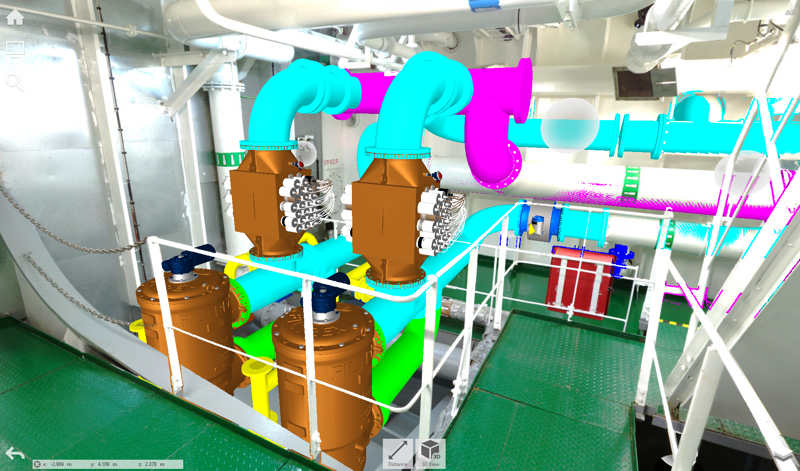
This engineering approach is especially important when replacing another maker’s underperforming system. Existing foundations, cable routes, penetrations and pipe branches may be reusable in part, but only after proper review. A clear tie-in analysis helps determine what can be retained and what should be modified to support the new system safely and efficiently.
Commissioning and training are also central to project success. Even a well-designed ballast water treatment system retrofit will underperform operationally if alarm handling, reporting functions and normal operating procedures are not properly handed over to the crew. DESMI therefore supports both technical commissioning and practical operational familiarisation.
The detailed project scope should always be clarified on a case-by-case basis. Structural modifications, vessel preparation, class submission fees, yard work and stability review may sit partly outside the core system supply depending on contract structure and installation model.
Compliance, documentation and approval requirements
Compliance in ballast water management is governed by more than the treatment technology itself. For retrofit projects, the relevant framework typically includes the IMO Ballast Water Management Convention, the D-2 discharge standard, the BWMS Code and, where applicable, United States Coast Guard considerations. The selected system, installation arrangement and vessel application must align with the regulatory regime under which the vessel operates.
DESMI CompactClean can be supplied in designs tested to IMO and USCG-relevant requirements, subject to confirmation of the specific variant, operating basis and vessel application. This distinction matters. It is not enough to state that a replacement system is approved in general terms. Project documentation must show that the selected system, installed configuration and operating mode are appropriate for the vessel and intended waters.
Typical documentation and approval considerations in a retrofit project include:
Applicable IMO and, where relevant, USCG approval basis
D-2 discharge performance requirements
BWMS Code alignment for the selected system design
Class review of new piping, electrical integration or structural modifications
Commissioning records and operational documentation
Reporting functions for ballast-water operations and monitored parameters
CompactClean can automatically generate PDF reports for ballast-water operations and monitored parameters, which may support onboard record handling and interaction with authorities. However, compliance always depends on correct system selection, proper installation, commissioning, operation, maintenance and the availability of project-specific documentation. A replacement alone does not automatically guarantee compliance.
Service, spare Parts and lifecycle support for ballast water treatment retrofit
Long-term reliability depends as much on what happens after installation as on the retrofit itself. DESMI supports ballast water treatment retrofit services with lifecycle support intended to keep the system operational, maintainable and properly documented over time. This is particularly important for replacement projects, where the owner’s motivation is often to move away from recurring faults, weak support or uncertain spare-parts access.
DESMI service packages can include inspection of items such as backflush pump components, pressure, temperature, flow, UV and water-level sensors, actuated valves, filter parts and electrical cabinets. At extended service intervals, selected sensors, transmitters and wear components may be replaced according to the defined service scope. This structured approach helps owners maintain visibility over system condition and supports more predictable lifecycle planning.
For operators managing fleets across regions, lifecycle support is also a procurement issue. Reliable access to spare parts, technical guidance and documented service routines reduces uncertainty in planning and makes the replacement investment easier to justify over the full operating period.
Learn more about ballast water management service and available spare parts and maintenance support.
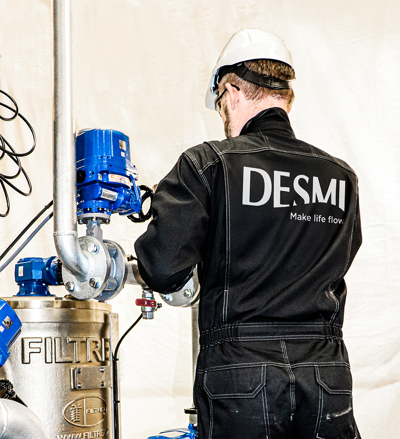
Support after installation may include:
Planned inspections and functional checks
Sensor checks and selected component service
Cleaning of filters, housings and relevant instrumentation points
UV-related service activities where applicable
Workshop repairs and on-site service support
Spare-parts supply and service agreements
Remote support through internet uplink options where installed
DESMI service packages can include inspection of items such as backflush pump components, pressure, temperature, flow, UV and water-level sensors, actuated valves, filter parts and electrical cabinets. At extended service intervals, selected sensors, transmitters and wear components may be replaced according to the defined service scope. This structured approach helps owners maintain visibility over system condition and supports more predictable lifecycle planning.
For operators managing fleets across regions, lifecycle support is also a procurement issue. Reliable access to spare parts, technical guidance and documented service routines reduces uncertainty in planning and makes the replacement investment easier to justify over the full operating period.
Learn more about ballast water management service and available spare parts and maintenance support.
FAQ: Ballast water treatment system retrofit and replacement
What does a ballast water treatment retrofit normally include?
It typically includes vessel survey, engineering review, layout development, equipment supply, installation planning, control integration, commissioning documentation and crew training. The exact scope depends on the vessel and on whether the project is a replacement, upgrade or first-time integration.
When should a vessel consider replacing its current BWMS?
Replacement is often considered when the existing system no longer matches the vessel’s trading pattern, creates recurring maintenance issues, is difficult to operate, or performs poorly in the actual water conditions the ship encounters. A technical review should determine whether replacement is preferable to repair or modification.
Can CompactClean be fitted on existing vessels?
Yes, DESMI presents CompactClean as a retrofit solution for existing vessels. Suitability must still be verified through vessel survey and engineering review covering space, piping, electrical supply, automation interfaces and maintenance access.
How does UV treatment perform in low UV-T water?
CompactClean can be supplied for treatment down to 35% UV transmission in IMO waters and 40% in USCG territory or for global operation, depending on the selected configuration and approval basis.
What information is needed for an initial retrofit evaluation?
Useful input includes vessel type, ballast pump capacity, general arrangement drawings, piping details, electrical data, control system information, available installation areas, trading pattern and class requirements.
What support is available after installation?
DESMI offers ballast water treatment retrofit services beyond commissioning, including spare parts, uplink support, planned maintenance, yearly compliance surveys, 2.5-year and 5-year service packages, UV unit overhaul, and support during docking periods and special surveys.