
District Cooling
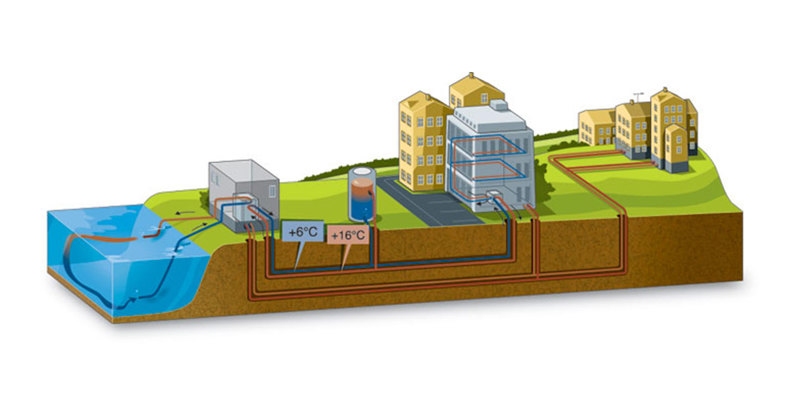
District cooling supplies chilled water from a centralized plant - or via “free cooling” using naturally cold seawater - through an insulated pipe network to multiple residential, commercial, and industrial buildings for air-conditioning and process cooling.
By producing cooling at scale, district cooling can significantly cut electricity use versus stand-alone building chillers - often cited in the ~35–60% range depending on system design, climate, and baseline. It can also reduce the total amount of refrigerant in the built environment by centralizing it at the plant and enabling lower-GWP choices - helping lower leakage risk and environmental impact.
Where DESMI adds value
 |
Water intake and free cooling |
| Raw water abstraction, seawater systems, and free cooling duties. |
 |
Central plant circulation |
| Condenser water, chilled water, and auxiliary duties. |
 |
Cooling tower applications |
| Circulation and related services. |
 |
Network circulation |
|
Solutions for higher pressure ratings (e.g., for transmission and distribution) |
Built for efficiency - designed for uptime
- High hydraulic efficiency and low NPSH to support stable operation and reduced energy consumption.
- Maintenance-friendly design and long service life to minimize unplanned downtime.
- Configured to your project: motors, controls, and accessories (e.g., frequency converters) to match real operating profiles.
Typical chilled-water temperatures vary by design, but many systems deliver supply water around ~4–6°C (≈39–43°F).
Customer stories


Recommended products


