Hydrophore Units
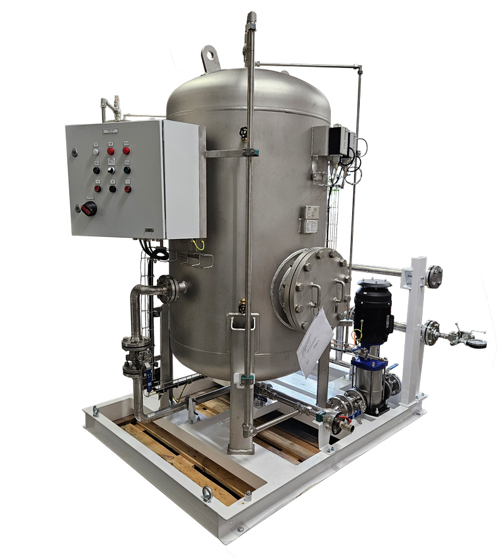
DESMI Hydrophore units are packaged pressure-boosting systems developed for the stable onboard distribution of fresh water, sanitary water and utility water on marine and naval vessels. Each system combines pumps, a pressure vessel and automatic controls in one coordinated solution, helping shipowners, yards, naval integrators and technical teams maintain dependable water pressure as onboard demand changes throughout daily operation.
As a detailed solution page, this page focuses on hydrophore performance in shipboard water distribution rather than on general offshore or industrial pumping. The objective is straightforward: controlled pressure, practical integration and serviceable design for vessel applications where continuity, maintainability and project-specific compliance matter.
Hydrophore units for stable onboard water pressure
A hydrophore unit is a complete pressure system designed to maintain stable water pressure in onboard networks where consumption varies over time. In marine and naval environments, that typically means supplying accommodation areas, sanitary services and utility-water functions without relying on a simple standalone pump arrangement.
By combining a pump set, a pressurised vessel and automatic control logic, Hydrophore units help smooth out pressure fluctuations and support consistent distribution across the vessel. This makes them relevant for both commercial marine projects and defence programmes, where reliable onboard services are essential to daily operation and crew welfare.
DESMI supports these requirements with engineered marine pumping solutions and project-specific hydrophore configurations selected according to vessel type, duty profile and installation constraints.
Typical applications on marine and naval vessels
Onboard marine and naval vessels, hydrophore systems are typically used wherever stable water pressure is required for domestic or utility-water distribution. The exact duty depends on the vessel arrangement, the water quality involved and whether the system is intended for potable-water, sanitary-water or general utility-water service.
Typical applications include:
-
Accommodation water supply for showers, washbasins and general crew services
-
Galley water distribution
-
Laundry supply systems
-
Sanitation networks and associated service-water duties
-
General utility-water functions that require controlled and dependable pressure
These systems support wider vessel operations by providing a stable water supply to everyday onboard services. However, a hydrophore unit should not automatically be described as a fire-fighting pump, cooling pump or washdown pump unless the specific configuration has been selected and documented for that duty.
Key operational benefits of Hydrophore units
For shipowners, yards, operators and technical managers, the value of Hydrophore units lies in controlled pressure distribution through a packaged and well-defined system design. Instead of specifying separate components independently, the project can be built around an integrated pressure-boosting arrangement suited to the intended onboard duty.
Key operational benefits typically include:
-
Consistent onboard water pressure under changing demand conditions
-
Simplified integration of pumps, vessels and controls into one coordinated system
-
Dependable operation for essential accommodation and utility-water services
-
Support for maintainability through an accessible system layout and documented components
-
A practical basis for repeatable specification in newbuild, refit and replacement projects
For defense and naval projects, a defined hydrophore package can also support procurement efficiency and technical alignment across the vessel programme. Benefits such as lower energy consumption, reduced noise, reduced wear or reduced pump cycling may be achievable in selected configurations, but these should always be assessed against the actual control philosophy, demand profile and final system design.
Technical design and configuration of the hydrophore system
The core of a hydrophore system is the interaction between the pump set, the pressure vessel and the control equipment. Together, these elements maintain the required system pressure as consumption rises and falls across the onboard network.
A typical hydrophore arrangement may include:
-
One or more pumps sized for the required duty
-
A pressure vessel for system stabilisation
-
A control panel and automatic pressure regulation
-
Pressure sensors or switches
-
Isolation valves, non-return valves and related pipework accessories
-
Interfaces for alarm, monitoring or vessel automation systems where required
In operation, the control system monitors pressure and responds when demand changes. If water consumption increases, the control arrangement starts or regulates the pump set to maintain the defined pressure range. When demand falls, the pressure vessel and controls help to stabilise the system and prevent unnecessary disturbance to supply conditions.
The final pump arrangement, vessel size, materials, control philosophy and performance are selected according to the vessel’s water duty, pressure requirements and installation constraints. Depending on project needs, the unit may be configured for fixed-speed or variable-speed operation, and in vertical or horizontal arrangements where the selected design allows. Configuration, classification and defence-related requirements should be confirmed during project specification.
Hydrophore units for defence projects, MOTS Pumps and naval requirements
DESMI can support defense and navy projects with hydrophore configurations developed from proven commercial designs under a Military Off-The-Shelf approach. In practice, this means using an established design basis and adapting it to the documentation, integration and operational requirements defined by the naval programme.
For procurement teams and naval integrators, MOTS Pumps and related hydrophore solutions can offer a more repeatable starting point than a fully bespoke design from first principles. This can be relevant where maintainability, configuration control and lifecycle planning are important decision factors.
Hydrophore units may also form part of a wider package of Naval pumps and auxiliary pumping systems supplied for defence vessels. Where required, DESMI can assess project-specific shock, vibration or low-signature requirements as part of the specification process. However, Shock rated pumps should not be treated as an automatic description of every hydrophore system. Shock-rated or vibration-qualified performance must be confirmed for the exact configuration, together with the applicable testing scope and documentation.
A safe basis for specification is to treat the hydrophore system as a naval-capable solution that can be supplied with the required project documentation, design adaptations and agreed qualification activities.
Materials, controls and project-specific options
Material selection and control philosophy depend on the service duty and the vessel design. Potable-water, sanitary-water and utility-water systems may have different requirements for corrosion resistance, hygiene, interfaces and documentation, so the specification should be aligned with the exact onboard function from the start of the project.
Project-specific options may include:
-
Material selection according to water quality and hygiene requirements
-
Control interfaces for local operation, alarms and vessel automation
-
Fixed-speed or variable-speed operation where suitable for the selected duty
-
Vertical or horizontal arrangement depending on footprint and installation access
-
Redundant pump arrangements where operational availability requires them
-
Documentation packages aligned with yard, owner or defence procurement expectations
For potable-water systems in particular, material suitability and contamination control must be carefully specified. Sanitary-water and utility-water duties may require different component choices and approval routes. For this reason, one standardised configuration does not automatically fit every vessel or every onboard water service.
Compliance, Standards and Testing
Compliance for hydrophore systems is project-specific and linked to the vessel type, flag, classification scope and end-user requirements. This is particularly important for naval procurement, where commercial marine requirements may be supplemented by additional documentation, inspection or qualification criteria.
During specification, the project team should define the applicable requirements for:
-
Marine classification and vessel approval scope
-
Pressure-vessel rules and associated certifications
-
Electrical supply, controls and automation interfaces
-
Potable-water, sanitary-water or utility-water material requirements
-
Inspection, documentation and traceability
-
Factory acceptance testing and agreed verification activities
-
Naval shock and vibration requirements where relevant
DESMI can supply hydrophore solutions in accordance with agreed project requirements, but final compliance statements should always follow the confirmed specification and quotation. Testing, inspection and documentation scope should therefore be agreed during the project phase rather than being assumed as standard for every configuration.
Service, maintenance and lifecycle support for Hydrophore units
Lifecycle value depends not only on the initial unit design, but also on how the hydrophore system is supported in operation. DESMI helps customers plan for maintainability, spare parts, commissioning and documentation so that the system remains practical to own and service over time.
Support may include:
-
Technical documentation for installation, operation and maintenance
-
Commissioning assistance and project support
-
Spare parts planning for pumps, controls, valves and wear components
-
Service coordination through DESMI’s global network
-
Guidance on maintainability, redundancy and lifecycle considerations
For operators and procurement teams, early attention to maintainability can help reduce operational risk and support a lower total cost of ownership across the service life of the vessel. This is particularly relevant for ships operating globally, where access to service support and parts availability should be considered alongside technical performance at the specification stage.
Frequently asked questions about hydrophore units
What is a hydrophore unit?
A hydrophore unit is a packaged pressure-boosting system comprising pumps, a pressure vessel and controls used to maintain pressure in onboard fresh-water, sanitary-water or utility-water networks.
Can one system serve both potable water and sanitary water?
Possibly, but this must be assessed case by case. Separate or specially specified arrangements may be required to meet hygiene, material and contamination-control requirements.
How is pressure controlled in a hydrophore system?
The control system monitors pressure and operates the pump set together with the pressure vessel to maintain the required pressure range as demand changes. Variable-speed control may be available depending on the selected configuration.
What does MOTS mean?
MOTS means Military Off-The-Shelf. It refers to a proven design basis adapted for defence procurement and naval requirements. It does not in itself confirm shock rating or military certification.
Are naval or shock-rated configurations available?
DESMI can support naval projects with project-specific configurations, and shock- or vibration-qualified designs may be available where required. Qualification must be confirmed for the exact unit, including the applicable test requirements and documentation.
What information does DESMI need for quotation?
Typical inputs include vessel type, water duty, required flow and pressure, peak demand, redundancy expectations, installation arrangement, available footprint, electrical supply, automation interface, classification scope and any naval shock or vibration requirements.


