
District Heating across North China
Beyond Pipe Replacement: How DESMI Helps Strengthen District Heating in North China’s Older Neighborhoods
As part of China’s wider urban renewal efforts, the modernisation of district heating in older residential communities has become an increasingly important priority. Upgrading these systems is not only about replacing ageing pipes, but about improving the reliability and performance of the entire heating network.
Within the vast urban renewal effort, an invisible “lifeline” determines the winter warmth of millions of households — the heating network and heat exchange station equipment.
This infrastructure is especially critical in Northern China, where winters are cold and dry, with extreme lows often dropping below -15°C and heating seasons lasting up to four months.
Against these demanding conditions, a large share of communities built in the 1980s and 1990s have become the most challenging link in the centralized heating network covering hundreds of millions of square meters.
The four Heating Challenges in Old Neighborhoods
1. Aging Pipelines
After 30–40 years of service, courtyard pipelines commonly suffer from corrosion, scaling and degraded insulation, leading to persistent leaks, drips and energy losses. Undersized diameters, inconsistent pipe materials and high local resistance mean hot water "can't circulate properly" — while energy consumption remains stubbornly high.
3. Aging Heat Stations
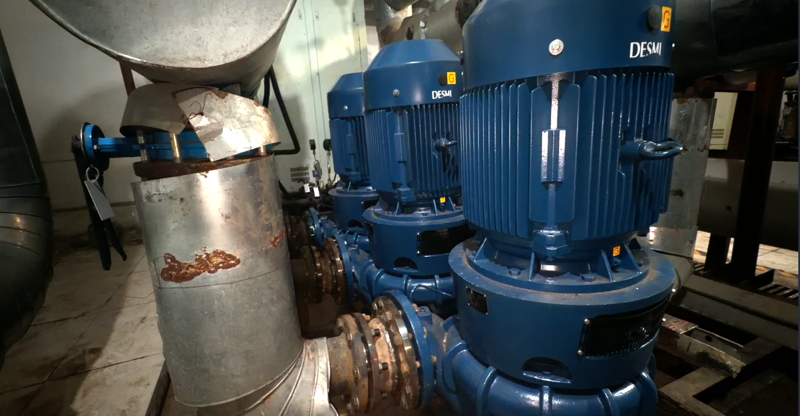
Frequent hydraulic imbalance can result in "Top floors cold, ground floors overheated"; "near-end piping scalding, far-end piping freezing". These frequent resident complaints stem from degraded circulation pump efficiency and declining hydraulic performance at heat exchange stations, which can no longer support the complex branched networks of older communities.
2. Series Systems
Many older neighborhoods still use traditional series-connected heating, where “one blocked unit” can leave the whole building cold. A faulty valve or blocked pipe in one household can therefore affect the entire unit. The major push in recent years for series-to-parallel conversion is precisely aimed at solving this long-standing problem.
4. Limited Renovation Space
Old neighborhoods have dense underground utilities, cramped sites and tight construction windows. Heat exchange stations are often squeezed into basements or corner spaces. Equipment replacement cannot involve major demolition and maintenance certainly cannot mean days of heating outages — placing extremely high demands on equipment structural design and operational convenience.
DESMI × China Huadian Group: Nordic Expertise Powering North China's Warmth
The renovation challenges require equipment that can deliver reliable performance while fitting into the practical limitations of existing heating infrastructure.
Since entering China, DESMI has brought mature Nordic district heating solutions to the Chinese market. In 2025, DESMI partnered with China Huadian Group’s heating subsidiary to advance project implementation, deeply participating in local district heating renovation projects.
For these projects, DESMI has mainly supplied ESL and NSL pumps, supporting efficient circulation and stable operation across the district heating system.
The cooperation brings DESMI’s experience in district heating applications into projects where reliability, hydraulic performance and ease of operation are essential.
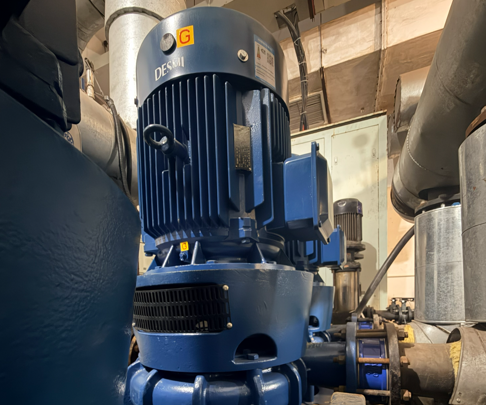
5 Heat Sources. 100+ Heat Exchange Stations.
A single renovation initiative will span 5 heat sources and more than 100 heat exchange stations.
At this scale, DESMI’s district heating expertise will support more reliable operation across a broad heating network — helping ensure dependable heat delivery throughout North China’s demanding winter season.


