Ballast Water Treatment Systems | CompactClean
A Ballast Water Treatment System is now a critical part of compliant vessel operation in international trade. DESMI CompactClean is a chemical-free ballast water treatment system for commercial vessels, combining automatic filtration and UV treatment to support reliable ballast water management across varying operating profiles, vessel types, and water conditions. Designed for both ballasting and de-ballasting sequences, CompactClean helps shipowners, operators, yards, and technical managers address global compliance requirements without adding chemical storage or dosing systems on board.
CompactClean is developed for practical marine use. It is suitable for newbuild, retrofit, and replacement projects, and can be supplied for a wide range of ballast pump capacities. For operators trading across multiple regulatory regimes, system selection is not only about treatment principle, but also about approval scope, installation arrangement, utilities, holding time, and day-to-day operability. DESMI supports this process with engineering dialogue, documentation, and configuration options tailored to the vessel and its trading pattern.
CompactClean system options
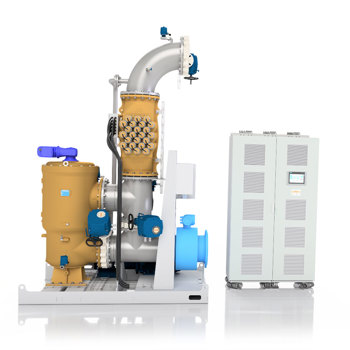
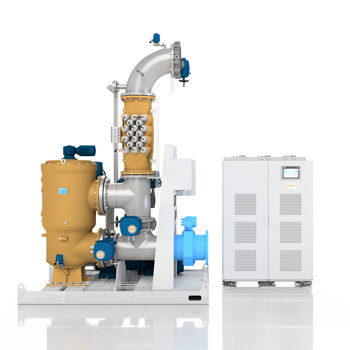
Ballast Water Treatment System for global marine compliance
DESMI CompactClean is a Ballast Water Treatment System designed for vessels that need dependable ballast water management across global trading routes. The core treatment principle is straightforward: ballast water passes through an automatic filter to remove larger organisms and suspended matter, then through a UV chamber where microorganisms are inactivated without active chemical dosing. This makes CompactClean one of the ballast water treatment technologies suited to operators who want compliant treatment without handling treatment chemicals on board.
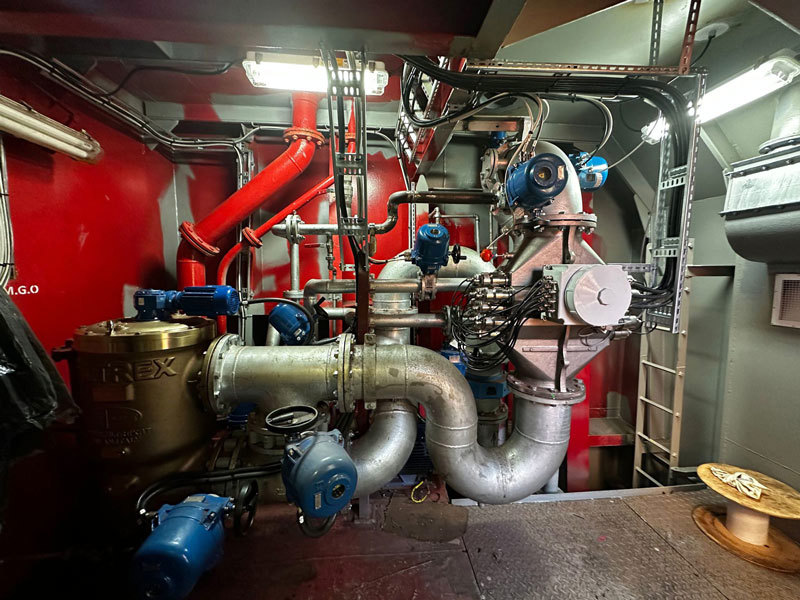
For ships trading internationally, global compliance has direct operational consequences. The selected system must match the vessel's approval requirements, trading pattern and onboard constraints, while also performing in varying salinity, temperature and water-quality conditions. CompactClean is intended for exactly that environment. It is available in designs tested to meet relevant approval frameworks for operation in IMO-regulated waters and USCG-controlled waters, and it is engineered for a wide range of vessel types and installations.
Reliability and compact installation matter because ballast water treatment is rarely considered in isolation. Machinery-room space is often limited, pipe routing may be fixed, and any added system complexity can affect commissioning, maintenance and uptime. CompactClean addresses these constraints with a compact arrangement, automated operating logic and installation options that support both newbuild programmes and retrofit projects.
Why choose CompactClean for ballast water treatment
CompactClean is developed to link technical treatment performance with day-to-day vessel operation. For owners, operators and technical managers, the main value lies in a combination of approval scope, compact design, automation and predictable operation in demanding conditions.
Worldwide operability: the standard CompactClean variant is intended for vessels trading globally, including routes where both IMO and USCG ballast water treatment requirements must be considered.
Chemical-free treatment: filtration and UV treatment remove the need for onboard storage, dosing and handling of active treatment chemicals during normal operation.
Compact footprint: the system is designed for installation where space is restricted, often reducing the need to relocate surrounding equipment.
Automated operation: automatic start-up, flow control, lamp dimming, backflush and recirculation help reduce crew workload and support consistent treatment performance.
Low auxiliary-system requirements: electrically actuated valves and an air-cooled main electrical cabinet can simplify installation by avoiding separate compressed-air and additional cooling-water arrangements.
Performance in challenging water: the system is positioned for dirty water and low UV-transmission conditions, which is particularly relevant for ships operating in variable ports and coastal waters.
These features translate into practical benefits across the vessel lifecycle. A compact and simplified installation can lower retrofit complexity. Automated functions can reduce the risk of incorrect operation. Chemical-free treatment can ease safety, logistics and crew handling requirements. For procurement and technical management teams, this supports a more robust business case based on compliance, operational continuity and total cost of ownership.
DESMI also offers access to related marine technologies and support resources, including ballast water management service and technical guidance for vessel-specific system configuration.
How the Ballast Water Treatment System works on board
The CompactClean process is designed to support compliant treatment during both ballast and de-ballast operations without chemical dosing. During ballast uptake, incoming water first passes through an automatic filter. This stage removes larger organisms and suspended solids before the water enters the UV treatment chamber. The filtered water is then exposed to high-intensity ultraviolet light, which inactivates microorganisms before the treated ballast water is sent to the ballast tanks.
During de-ballasting, the treatment principle remains controlled and automated, but the filter is bypassed. This allows ballast water to pass through the UV unit during discharge without repeating the filtration stage. The arrangement supports efficient operation while maintaining the treatment sequence required by the system design.
Several integrated functions support onboard performance:
Automatic start-up: the system verifies that the UV chamber is filled with water before lamp ignition.
Automatic filter backflush: when differential pressure across the filter reaches a defined threshold, the filter cleans itself automatically.
Recirculation: after UV operation, the system enters a recirculation phase to cool the lamps. DESMI states a two-minute recirculation period for the current system version.
Stripping: the integrated pump arrangement supports stripping operations after de-ballasting.
Cleaning-in-place: maintenance cleaning of the UV unit can be carried out through recirculation cleaning procedures in accordance with the applicable operating manual.
A DESMI Modular S pump is used as a multipurpose unit for backflush, recirculation and stripping. This integrated approach helps reduce component count and supports a more compact overall system arrangement on board.

Ballast Water Treatment System design, capacities and installation options
CompactClean is available across a broad capacity range, from 35 m³/h to 2,500 m³/h. This allows system selection for a wide range of vessel sizes, ballast pump duties and installation concepts. Exact dimensions, pressure losses, electrical loads, connection sizes and other project data should be taken from the relevant datasheet and approval documentation for the chosen model.
In practical project terms, DESMI offers three main delivery formats for this Ballast Water Treatment System:

Loose components

Skid-mounted systems

Containerised or deckhouse solutions
CompactClean and CompactClean OptIMO: selecting the right system variant
DESMI offers two main CompactClean variants because not every vessel has the same trading pattern or approval scope. The correct selection depends first on where the ship trades and then on the corresponding compliance, software and installation requirements.
CompactClean is the standard variant for worldwide operation. It is intended for vessels that trade across international routes and need one system solution for broad operational coverage. For many owners, this is the logical choice where flexibility, simplified fleet standardisation and operation across multiple jurisdictions are important.
CompactClean OptIMO is aimed at vessels trading mainly in IMO waters. This version is typically relevant when the vessel's operating profile is centred on IMO-regulated routes and the owner wants a configuration aligned with that trading pattern.
When comparing the two, key selection criteria include:
the vessel's actual and expected trading area
approval scope and authority requirements
software mode and operational logic
installation arrangement and available footprint
flow rate and ballast pump characteristics
hazardous-area classification, if relevant
Where a vessel needs to operate globally with minimal operational variation, the standard CompactClean will often be the preferred option. Where the vessel trades predominantly in IMO waters, CompactClean OptIMO may be the more suitable configuration. Final selection should always be confirmed against the exact vessel profile, applicable certificates and project-specific engineering requirements.


Ballast water treatment retrofit and replacement for existing vessels
Ballast water treatment retrofit projects are often driven by one of two situations: either a vessel still needs a compliant BWMS installation, or an existing system is underperforming in daily operation and must be replaced. In both cases, space, access and integration are usually the defining constraints. CompactClean is well suited to these replacement and retrofit scenarios because the system is designed with a low footprint and flexible installation formats.
For many existing vessels, machinery rooms were never intended to accommodate ballast water treatment equipment. Pipe runs may be congested, deck openings limited and maintenance access difficult. A compact system layout can therefore reduce the amount of structural modification and relocation work required. Where replacement is involved, compact dimensions may also simplify the removal of the existing BWMS and installation of the new arrangement.
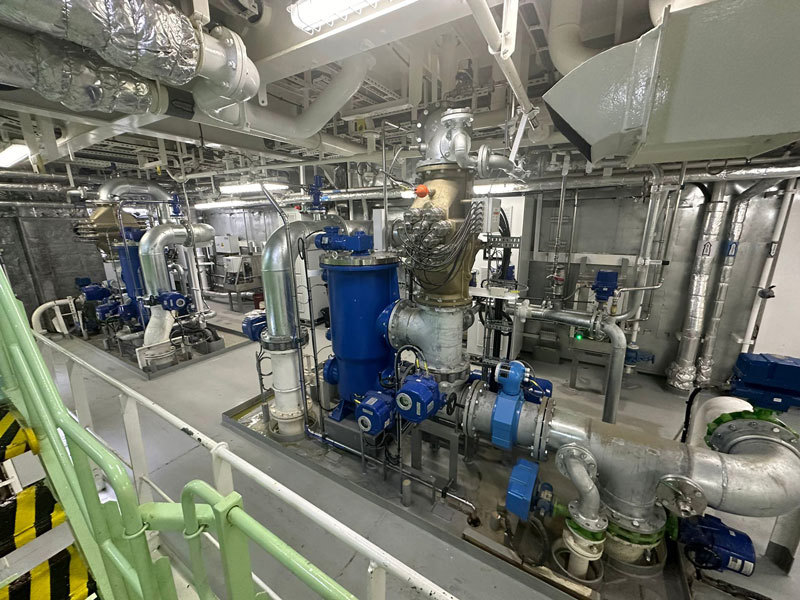
DESMI supports retrofit and replacement projects through vessel-specific engineering services, which may include:
3D scanning of the installation area
arrangement and routing studies
foundation and interface design
class documentation and review drawings
support for replacement of underperforming or impractical legacy BWMS installations
assessment of ballast piping, electrical capacity and hazardous-area boundaries
Loose-component delivery is often used where onboard assembly is necessary, while deckhouse solutions may be chosen when internal space is unavailable. For replacement projects, DESMI can help evaluate whether the existing pipework, pump duty and installation concept can be reused or should be modified. This is particularly relevant where the current system creates operational friction, excessive maintenance demand or poor performance in challenging water.
If you are planning a retrofit, it can be useful to review DESMI's broader capabilities within marine and offshore solutions as part of the vessel's overall technical upgrade strategy.
UV water treatment for ballast water in dirty and low-transmission water
UV water treatment for ballast water is especially relevant for operators that trade through ports and coastal regions where water quality varies significantly. UV systems must be able to handle changing UV transmission levels, suspended matter and organics while still delivering the required treatment effect within their approved operating envelope. CompactClean is developed for that challenge.
The system combines filtration with a UV chamber designed to deliver a high applied UV dose to the treated flow. Applied dose depends on system size, flow, water quality, UV transmission and operating conditions, but the core objective is the same: expose organisms to sufficient UV energy to prevent them from remaining viable in accordance with the applicable treatment regime.
DESMI positions CompactClean for operation in low-transmission water, with stated capability down to 35% UV transmission in IMO waters and 40% in USCG territory. This is important for vessel operators because poor UV transmission is one of the main practical constraints in UV-based ballast water treatment technologies. A system that can continue to operate in dirty water conditions can help reduce disruption to ballast operations and route planning.
Further operational advantages come from:
Automatic lamp dimming: adjusts energy use according to treatment demand and operating conditions.
Chemical-free treatment: avoids active-substance dosing during normal operation.
No stated salinity or temperature limitations: DESMI reports suitability across fresh, brackish and marine waters under the relevant approval framework for selected configurations.
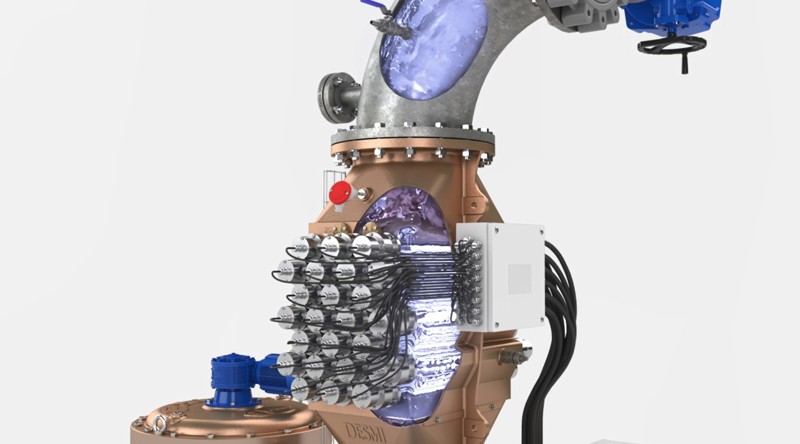
For operators evaluating types of ballast water treatment systems, this means CompactClean combines the simplicity of a chemical-free process with a design focus on real-world water quality variation. Final suitability should still be verified against vessel-specific operating patterns and approved limitations for the selected system model.
Approved ballast water treatment systems for IMO and USCG requirements
Approval status is a central part of selecting from the available approved ballast water treatment systems. The relevant regulatory framework is based on the IMO Ballast Water Management Convention, the D-2 discharge standard and, for vessels operating in US waters, USCG ballast water treatment approval requirements. Any system must be assessed not only on technology type, but also on the exact combination of model, capacity, software, operating mode and installation arrangement.
The IMO framework requires ships to manage and discharge ballast water in a way that reduces the transfer of harmful aquatic organisms and pathogens. Regulation D-2 defines the ballast water performance standard to be met at discharge. The BWMS Code sets the testing and approval basis for systems intended to comply with those requirements. DESMI states that CompactClean is available in designs approved according to the revised IMO BWMS Code for applicable installations.
For vessels trading in US waters, USCG ballast water treatment approval is equally important. IMO and USCG regimes do not apply identical test and compliance methodologies for UV-based systems, which is one reason system design, software logic and approval scope must be checked carefully. DESMI presents CompactClean as a system intended for operation in both IMO and USCG regimes, while CompactClean OptIMO is intended mainly for operation in IMO waters.
Depending on the selected configuration, CompactClean can be supplied in accordance with approval and certification requirements relevant to:
IMO Ballast Water Management Convention
D-2 discharge standard
IMO BWMS Code
USCG type approval requirements
classification-society review, including Lloyd's Register for selected models and configurations
hazardous-area installation requirements through ATEX and IECEx-certified versions up to selected capacities for tanker applications
Approval should always be verified against the vessel's flag, class, trading route, hazardous-area classification and the current certificate set for the exact CompactClean model under consideration. This is also where DESMI engineering support becomes valuable during project definition and class submission.
Automation has a direct effect on treatment consistency, crew workload and long-term operability.
CompactClean is designed to automate the main treatment steps and monitoring functions so that routine ballast operations can be carried out with less manual intervention and with clearer operational feedback.
The system is controlled via a graphic HMI touchscreen interface, and DESMI states that the main panel can be placed up to 100 metres from the BWMS. Automatic start-up logic verifies that the UV chamber is filled before lamp ignition. Flow control and lamp dimming are handled automatically, and the filter initiates backflush based on differential pressure. Electrically actuated valves further simplify the system by removing the need for a separate pneumatic valve infrastructure.
Operational and lifecycle features include:
graphic HMI for status overview, control and monitoring
automatic start-up sequence
automatic filter backflush
automatic recirculation after UV operation
PDF report generation for ballast-water operation records and monitored parameters
integrated pump functionality for backflush, recirculation and stripping
support for cleaning-in-place procedures during maintenance
These functions support more consistent treatment over time because the system is less dependent on repeated manual steps. They also contribute to easier troubleshooting, clearer reporting to authorities and simpler crew familiarisation. For owners and technical departments, this can improve lifecycle performance by reducing avoidable operating errors and helping maintenance teams work from documented system data.
Digital and service-related support may also be relevant during operation, including access to tools such as DESMICloud where applicable for performance visibility and historical analysis.
Frequently Asked Questions about CompactClean Ballast Water Management Systems
Which vessel types can CompactClean be used on?
CompactClean is designed for commercial marine applications across a broad range of vessel types, including tankers, container vessels, bulk carriers, and other ships that require ballast water treatment. Suitability depends on the vessel’s ballast flow, installation constraints, approval needs, and operating profile.
How do I decide between CompactClean and CompactClean OptIMO?
The key factor is trading pattern. Vessels operating worldwide, or trading on routes where USCG requirements must be met, will typically assess the standard CompactClean configuration. Vessels operating mainly in IMO waters may find CompactClean OptIMO more relevant. The final choice should also consider approval scope, operating mode, energy profile, and holding-time conditions.
Can DESMI support engineering and class documentation?
Yes. DESMI can support technical dialogue, engineering input, and documentation relevant to system integration and class review. Depending on project scope, this may include layout evaluation, installation concept support, and review of project-specific technical requirements.
Is turnkey installation available?
Installation is often carried out by the preferred yard or retrofit contractor, but DESMI can support projects through engineering coordination and, where relevant, work with partners on a wider delivery scope. The practical setup depends on vessel location, yard strategy, and the extent of onboard work required.
Are additional utilities such as compressed air or cooling water required?
CompactClean is designed to simplify utility demands. DESMI states that the system uses electrically actuated valves and an air-cooled main electrical cabinet, which reduces the need for compressed air and separate water-cooling arrangements in the main installation.
What regulations apply to ballast water treatment system selection?
Selection should be assessed against the IMO Ballast Water Management Convention, the IMO BWMS Code, and, where relevant, US Coast Guard approval requirements. Compliance is linked to the exact system design, certificate scope, installation arrangement, and how the vessel operates. A type-approved system must still be correctly specified and installed for the actual application.
Is there a holding-time requirement?
Holding time should always be verified against the applicable approval certificate and system configuration. DESMI’s USCG-related material refers to a minimum holding-time condition for relevant approved arrangements, so this should be checked as part of the technical review for the specific vessel.
How do IMO and USCG operating considerations differ for UV systems?
For UV-based ballast water treatment technologies, the regulatory assessment methods differ. IMO assessment is based on whether treated organisms remain viable or capable of reproducing, while USCG testing applies a different living-organism methodology. This is one reason why the required system variant and approval basis should be confirmed early in the project.


