DW Fuel Pumps
In this context, DW fuel pumps should be understood as deepwell fuel pumps for marine fuel systems. For operators, yards and system integrators working with conventional and alternative fuels, the requirement is clear: safe transfer, stable hydraulic performance, and a pump design that supports practical service on board. DESMI addresses that need with the DesFuel Deepwell Pump (RSL) - a purpose-built deepwell pump developed for marine alternative-fuel applications.
As a dedicated fuel transfer pump for demanding shipboard environments, DesFuel is designed for reliable handling of LNG, methanol, ethanol, ammonia and LPG in class-compliant marine fuel systems. The concept combines fuel flexibility, low leakage risk, and service-friendly installation, helping vessel owners and technical teams reduce maintenance complexity while maintaining continuity in daily operation.
For buyers evaluating a deepwell pump or a methanol fuel pump for newbuilds or retrofits, the key consideration is not only hydraulic duty. It is also how the pump integrates into the wider fuel gas system, supports hazardous-fuel handling, and remains accessible across the vessel lifecycle. That is where the DesFuel concept is engineered to add value.
DW fuel pumps for safe and flexible marine fuel transfer
When specifiers search for DW fuel pumps, they are typically looking for a deepwell pumping arrangement that can transfer fuel safely from the storage tank to the downstream service system. In marine alternative-fuel applications, that duty places strict demands on sealing integrity, cryogenic capability, stable flow, and practical maintainability. DESMI’s DesFuel Deepwell Pump (RSL) is developed specifically for that operating reality.
The pump is designed to support safe and flexible transfer of liquefied and low-flashpoint fuels in marine environments, where uptime, crew safety and regulatory compliance must be built into the equipment choice from the start. Rather than relying on a modified standard pump, DesFuel is engineered as a dedicated marine fuel pump for deepwell installation in fuel tanks and associated fuel gas systems.
This makes it relevant for projects where fuel strategy may evolve over time. A vessel may be specified today for one fuel, while future fleet planning calls for broader compatibility. In that context, the ability to handle multiple alternative fuels without modification becomes a practical design advantage, not just a product feature.
DesFuel as a deepwell pump solution for modern vessel fuel systems
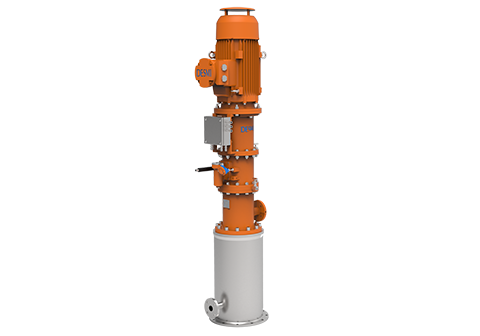
DesFuel is a vertical multistage deepwell pump installed in a caisson pipe, with key components such as the motor, coupling and main bearing positioned outside the tank. This arrangement is central to the pump’s value in marine service. By keeping critical mechanical components accessible from outside the fuel tank, the design simplifies inspection and maintenance compared with configurations where service work requires more intrusive tank-related procedures.
In daily vessel operation, accessibility matters. Fuel systems must support reliable transfer and supply without creating unnecessary downtime when maintenance is required. With the DesFuel arrangement, service work can be carried out without the same level of disruption associated with less accessible tank-installed equipment, and the need for gas freeing for maintenance is reduced. For operators, that can translate into shorter service interventions and improved operational continuity.
The deepwell installation principle also supports cleaner integration in compact machinery layouts common on board ships. The pump assembly works inside the caisson pipe, while the external placement of heat-generating components helps limit heat input into the tank. This is particularly important for liquefied fuels, where thermal management can affect boil-off behaviour and overall system stability.
Key design principles in the DesFuel deepwell arrangement:
-
Vertical multistage centrifugal pump configuration
-
Installation in a caisson pipe for tank-based fuel transfer
-
Motor, coupling and bearing located outside the tank
-
Improved access for maintenance and inspection
-
Reduced maintenance complexity in marine service
-
Lower heat input into the stored fuel
Applications for DW fuel pumps in marine operations
DW fuel pumps are relevant wherever fuel must be transferred safely and consistently from storage to supply systems under varying operating conditions. DesFuel is positioned for fuel transfer and fuel supply duties in alternative-fuel vessel systems, and it is well suited to the requirements of shipowners, shipyards and fuel gas system suppliers specifying low-emission propulsion or auxiliary fuel arrangements.
Typical applications include the transfer of LNG, methanol, ammonia, ethanol and LPG in marine fuel systems, as well as support functions around bunkering and onboard fuel handling. In these installations, the pump must do more than move fluid from A to B. It must operate reliably across changing loads, fit within a regulated hazardous-area concept, and support the vessel’s broader safety and compliance framework.
Relevant use cases include:
-
Fuel transfer from storage tank to downstream process or supply system
-
Fuel supply in marine fuel gas systems
-
Bunkering support and controlled onboard fuel movement
-
Liquefied fuel handling in low-emission vessel concepts
-
Alternative-fuel applications for newbuild and retrofit projects
Because the DesFuel concept is built around multi-fuel compatibility, it is relevant across a broad range of vessel types and project models. That includes installations where one owner is standardising around methanol, another around LNG, and a third requires future flexibility as fuel availability and regulations continue to develop.
For related marine applications, see DESMI’s broader products and solutions library, the customer story on ammonia fuel systems supported by magnetic drive pumps, and DESMI’s article on leakage-free methanol and ammonia pumps.
Performance, efficiency and operational reliability in deepwell fuel pumping
For technical buyers, pump selection is often driven by the combination of hydraulic performance and operational resilience. In practice, a deepwell fuel pump must maintain stable flow across varying engine loads and changing system demand without introducing unnecessary recirculation, thermal stress or downtime. DesFuel is designed with a wide operating window to support that requirement.
Stable fuel transfer is especially important in alternative-fuel systems, where downstream process conditions can vary and where pressure, temperature and fuel-state management are critical to safe operation. A pump with predictable hydraulic behaviour helps system designers size recirculation and control philosophy more efficiently. DESMI also positions the pump with low recirculation demand at relevant operating points, which can simplify system operation and support energy-conscious running.
Variable-speed capability is another important benefit in real vessel applications. When connected to a variable frequency drive, the pump can follow changing load conditions more precisely, supporting pressure control and operational flexibility rather than forcing the system into a narrow duty window. For operators, this contributes to smoother operation and can reduce stress on both the pump and surrounding system components.
Operational reliability is also linked to heat management and downtime reduction. By placing the motor, coupling and bearings outside the tank, the design helps reduce heat input into the stored fuel. In liquefied-fuel service, that is a practical advantage because lower heat input supports more stable tank conditions and can help reduce boil-off risk. Combined with easier access for maintenance, this contributes to higher availability over the life of the installation.
What matters in real operation:
-
Stable flow across varying vessel loads
-
Wide operating window for flexible system integration
-
Reduced need for recirculation in relevant duty conditions
-
Variable-speed operation for load-following control
-
Low heat input into the tank for liquefied fuels
-
Reduced downtime through accessible service design
Technical design features of DESMI DW fuel pumps
The DesFuel RSL is a vertical multistage centrifugal deepwell pump developed for hazardous and cryogenic marine fuel duties. The pump uses a sealed magnetic coupling, an air-cooled motor and an oil-lubricated main bearing, avoiding the need to use the fuel itself for motor cooling or bearing lubrication. For operators and specifiers, this is an important design distinction because it supports cleaner separation between mechanical drive components and the pumped medium.
The main construction is in stainless steel, reflecting the demands of alternative-fuel service and corrosive or low-temperature operating environments. The pump is available in several sizes - RSL 20, 25, 32, 40 and 50 - allowing the hydraulic selection to be matched to a wide range of marine fuel duties.
Product data indicates the following performance envelope for the DesFuel Deepwell Pump (RSL):
-
Capacity from approximately 0.5-6 m3/h up to 7-80 m3/h, depending on pump size
-
Maximum head per stage of 20 m for RSL 20 and 58 m for RSL 25-50
-
Maximum tank pressure up to 20 bar
-
Maximum outlet pressure up to 40 bar for RSL 20 and up to 55 bar for RSL 25-50
-
Motor range up to 9 kW-124 kW, depending on configuration
-
Nominal speed of 3500 rpm
The pump is also positioned for cryogenic duty. DESMI states that the design has been tested with liquid nitrogen at -196°C, supporting suitability for LNG applications where service temperatures are around -165°C. This is relevant not only to LNG fuel transfer, but also to the broader requirement for dependable low-temperature operation in liquefied gas systems.
Technical decision-makers often look beyond headline performance and consider the full installation concept. In that respect, the sealed magnetic coupling supports leakage risk reduction, the air-cooled motor removes dependence on fuel-based cooling arrangements, and the oil-lubricated main bearing helps avoid filter requirements linked to fuel-lubricated bearing concepts. Together, these features support a robust specification basis for marine alternative-fuel pumping.
For product-specific details, see the DesFuel Deepwell Pump (RSL) product page and the DesFuel pump brochure.
Deepwell pump compatibility with methanol and other alternative fuels
Fuel flexibility is one of the strongest arguments for selecting DesFuel in a changing marine market. The pump is presented by DESMI as capable of handling LNG, methanol, ethanol, ammonia and LPG without modification. For owners and designers planning around uncertain fuel pathways, that compatibility can reduce the risk of locking the vessel into a pump concept tied to only one fuel strategy.
This is particularly relevant where a project team is searching for a methanol fuel pump. Methanol is moving into mainstream maritime specification, but many fleets are considering mixed future-fuel strategies across vessel classes or charter requirements. A deepwell pump that can support methanol while also fitting other alternative-fuel applications creates more flexibility at fleet and system level.
The same applies to LNG and ammonia projects, where fuel characteristics, safety philosophy and temperature conditions differ significantly. Instead of redesigning around separate pump concepts for each fuel family, engineers can work from a pump platform developed for broad alternative-fuel compatibility. That can simplify both standardisation and future readiness in low-emission shipping projects.
In practical terms, this means DesFuel is relevant for:
-
Methanol and ethanol fuel systems
-
LNG fuel transfer and supply systems
-
Ammonia fuel system concepts
-
LPG fuel handling in marine applications
-
Fleet programmes where future fuel flexibility is part of the specification
If your project is focused specifically on methanol, DESMI also provides dedicated information on methanol pumps for marine applications.
DW fuel pumps, safety considerations and marine compliance
In alternative-fuel systems, safety is inseparable from pump design. A DW fuel pump must be selected not only for flow and pressure, but also for leakage control, hazardous-fuel handling, and integration into the vessel’s approval framework. DesFuel addresses these requirements through a sealed magnetic coupling and a layout intended to reduce leakage risk in service.
For low-flashpoint and liquefied fuels, reducing the number of potential leak paths is a core specification concern. The sealless magnetic coupling concept supports that objective by providing a closed transfer arrangement suited to hazardous fuel environments. Combined with the external positioning of key components, the design also supports more practical maintenance planning and lower intervention complexity.
From a regulatory perspective, DESMI states that the DesFuel Deepwell Pump can be supplied in designs intended for marine fuel systems developed in accordance with the IGF Code and IGC Code, and for installations that must meet major marine classification society requirements. In project terms, this means the pump is aimed at class-compliant marine fuel systems where technical documentation and submittal support are essential parts of the approval process.
During specification and approval, technical teams typically need clear documentation covering hydraulic data, materials, arrangement drawings, operating limitations and integration requirements. DESMI supports this process with project-relevant technical information to help yards, consultants and system integrators progress design review, procurement and class dialogue on a sound basis.
Typical compliance-related considerations for specification:
-
Hazardous-fuel handling and leakage risk reduction
-
Suitability for liquefied and low-flashpoint fuels
-
Alignment with IGF and IGC Code requirements at system level
-
Class documentation and approval support for the specific vessel project
-
Performance data and material information for engineering review
Documentation, service support and next steps with DESMI
Selecting a marine fuel pump is rarely a catalogue exercise alone. Most projects require dialogue around fuel type, duty point, tank arrangement, pressure levels, control philosophy and approval scope. DESMI supports that process with product data sheets, brochures, drawings, manuals and engineering input so specifiers can assess whether the DesFuel RSL is the right fit for the vessel and fuel system in question.
Beyond the initial supply, serviceability remains important throughout the pump lifecycle. DESMI’s global marine experience, combined with spare parts support and service capabilities, helps operators maintain performance and plan maintenance with less disruption. For technical purchasers, that contributes to lower lifecycle risk and better continuity after commissioning.
If you are comparing DW fuel pumps for a newbuild, retrofit or alternative-fuel conversion, DESMI can support you with project-specific clarification on performance range, materials, cryogenic suitability, fuel compatibility and documentation requirements. You can also explore DESMI’s broader alternative fuel pump portfolio for related solutions. Contact DESMI for technical guidance, documentation or a quotation for a DesFuel Deepwell Pump (RSL) solution tailored to your marine fuel system.
FAQ about DW fuel pumps and the DesFuel Deepwell Pump
What does DW mean in DW fuel pumps?
In this context, DW refers to deepwell. The term is used here for deepwell fuel pumps installed in marine fuel systems for transfer duty from onboard storage tanks to downstream systems.
Is a DW fuel pump the same as a deepwell pump?
In the context of this page, yes. The search term DW fuel pumps is interpreted as deepwell fuel pumps for marine fuel transfer applications.
Which fuels can the DesFuel Deepwell Pump handle?
DESMI presents the DesFuel RSL as suitable for LNG, methanol, ethanol, ammonia and LPG without modification. Final suitability should always be assessed against the specific duty, system arrangement and project requirements.
Is DesFuel suitable as a methanol fuel pump?
Yes. DesFuel is positioned for methanol service as well as other alternative fuels, making it relevant for operators and system designers seeking a dedicated marine methanol fuel pump with deepwell installation.
Can the pump also be used for LNG service?
Yes. DESMI states that the pump has been tested with liquid nitrogen at -196°C, supporting cryogenic relevance for LNG applications.
Why choose a deepwell pump for marine fuel transfer?
A deepwell pump allows fuel transfer directly from tank level through a caisson pipe arrangement while keeping the motor, coupling and main bearing outside the tank. This supports accessibility, reduced heat input to the stored fuel and practical maintenance in shipboard environments.
How is maintenance performed on the DesFuel RSL?
Because the motor, coupling and main bearing are positioned outside the tank, inspection and service access are improved compared with less accessible tank-installed concepts. DESMI also indicates that the arrangement can support service without gas freeing.
What technical data should be available for specification?
Technical buyers typically need hydraulic performance data, fuel compatibility information, material details, arrangement drawings, dimensional data, operating limitations, pressure requirements and documentation relevant to class review and system integration.
What are the main performance limits of the pump?
Data indicates capacities from approximately 0.5-6 m3/h up to 7-80 m3/h, depending on size; maximum head per stage of 20 m for RSL 20 and 58 m for RSL 25-50; maximum tank pressure up to 20 bar; and maximum outlet pressure up to 40 bar or 55 bar, depending on configuration.
Can the pump be supplied for class-compliant marine fuel systems?
Yes. DESMI states that the pump can be supplied in designs intended for marine fuel systems developed in accordance with IGF Code and IGC Code requirements at system level, subject to the specific vessel project and class approval process.
What information does DESMI need for a quotation or technical review?
It is helpful to provide the fuel type, required flow and pressure, tank arrangement, operating temperature, control philosophy, vessel type, project type such as newbuild or retrofit, and any class or approval requirements. That allows DESMI to guide configuration and documentation scope more accurately.
