
Shock Rated Pumps
Shock rated pumps are used where pump operation must continue under defined mechanical shock conditions in naval and defense service. At DESMI, selected shock rated pump configurations are available for mission-critical shipboard systems such as cooling, bilge, ballast, fuel, lubrication, fire-fighting, and general service duties. Shock qualification is always configuration-specific. That means the exact pump, motor, coupling, mounting arrangement, baseframe, pipe interfaces, orientation, and installation scope must be reviewed and confirmed for the project.
For naval architects, shipyards, system integrators, and procurement teams, this distinction matters. A shock rated pump is not simply a standard marine pump with a stronger casing. It is a defined assembly engineered and documented to remain operational before, during, and after a specified shock event, subject to the applicable test method and acceptance criteria. DESMI supports project-specific evaluation, documentation, and technical guidance so you can match the selected pump arrangement to the vessel requirements and procurement basis.
How shock-rated pumps differ from standard marine pumps
Standard marine pumps are typically selected for hydraulic performance, reliability, corrosion resistance, maintainability, and normal shipboard vibration and motion. They are designed to perform in marine operating conditions, but that alone does not mean they are verified for defined naval shock events. A shock rated pump differs because the complete installed arrangement is evaluated against specified shock loads and acceptance criteria.
That distinction is technical and documentary, not simply descriptive. The difference is not that one pump is generically “stronger” than another. It is that the shock rated configuration has a clearly defined assembly scope, installation basis, and verification path covering the pump, motor, coupling, mounting arrangement, supports, and interfaces. If one of those elements changes, the original qualification basis may no longer apply without engineering review.
For yards and integrators, this affects procurement and installation practice. A standard marine pump may be acceptable for many vessel services, while a shock rated pump is chosen where the naval specification requires documented survivability under defined shock conditions. This is why configuration control, traceability, and accurate installation records are central to naval qualification.
Shock rated pumps for naval fluid handling and mission-critical shipboard systems
Selected DESMI shock rated pumps support naval fluid handling where survivability, safety, and mission readiness depend on continued system availability. These solutions are relevant for defense platforms exposed to severe vibration, sudden impact loads, and defined naval shock events, including conditions associated with underwater explosions and pressure-wave effects. Depending on the duty, the selected configuration may be based on proven centrifugal pump platforms in vertical or horizontal execution
Because shock qualification applies to a tested or engineered arrangement rather than to an entire pump family, DESMI works from the actual installation envelope and operating duty. This includes hydraulic requirements, structural constraints, space limitations, fluid characteristics, and the required level of verification. Where applicable, selected configurations can be supplied as Military Off-the-Shelf, or MOTS-based, solutions adapted to naval specifications and supported by the documentation needed for integration and acceptance.
For related shipboard pumping duties, you can also explore pumps for navy ships, centrifugal pump technologies and product families, and DESMI’s broader defense segment solutions.
Critical applications across naval and defense vessels
Across warships, submarines, auxiliary vessels, and support platforms, shock pump installations are typically linked to onboard functions where loss of pumping capability can affect propulsion support, vessel survivability, or damage-control readiness. In these environments, fluid handling systems must do more than meet normal marine duty requirements. They must also align with the vessel’s specified shock and vibration design basis.
Typical applications include fuel transfer for propulsion and auxiliary equipment, lube oil service for engines and rotating machinery, bilge drainage, ballast control, seawater and freshwater cooling, fire-fighting, priming water, washdown, and other general service duties. For submarines and selected low-signature naval applications, additional requirements may apply, such as compact installation envelopes or magnetic signature constraints. Those requirements are separate from shock qualification and must be specified independently.
These duties are critical because they support essential ship functions. Fuel and lube oil systems sustain machinery operation. Bilge and ballast systems contribute to trim, drainage, and damage-control response. Cooling water systems protect engines, generators, heat exchangers, radar, and electronics from overheating. Fire-fighting and emergency water systems are central to onboard safety. Even utilities such as priming water and washdown can be operationally important when linked to mission continuity or equipment availability.
DESMI’s experience in marine and defense fluid handling supports these applications with project-specific pump selection, documentation, and integration guidance. For adjacent solutions, see marine and offshore pumping systems and fire-fighting systems for marine applications.
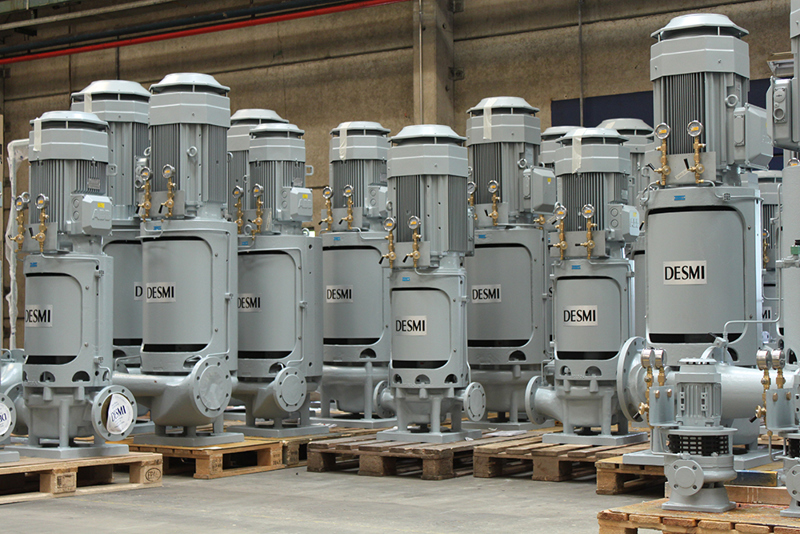
Live Shock Testing of DESMI Pumps
Key benefits of shock rated pumps
-
Supports operational continuity in mission-critical systems when the selected configuration is designed and tested for defined shock conditions.
-
Reduces the risk of interruption in cooling, bilge, ballast, fire-fighting, fuel transfer, and lubrication duties that are important to survivability and mission readiness.
-
Provides structural suitability for harsh naval environments involving shock, vibration, confined installation spaces, and demanding onboard interfaces.
-
Can be configured to suit project-specific flow, head, material, footprint, mounting, motor, and system integration requirements.
-
Supports MOTS-based procurement strategies by adapting proven pump platforms to naval requirements where applicable.
-
Can simplify lifecycle planning when pump families are standardized across multiple duties, helping align spare-parts and maintenance strategies.
-
Allows procurement teams to work from defined documentation, test evidence, and technical scope rather than generic product claims.
-
May offer energy-efficient hydraulic performance and favorable suction behavior depending on the selected pump family and duty point.
-
Can be supplied with engineering support for installation review, acceptance planning, inspection, and project-specific documentation.
-
Is backed by lifecycle support, including spare parts, maintenance planning, engineering review, and, where required, reassessment of qualified configurations.
Shock rated pumps design and technical features
Shock rated pump solutions may be based on vertical or horizontal centrifugal pump platforms, depending on the required duty, available space, and installation concept. In naval service, the important point is that qualification covers the complete assembly, not only the hydraulic casing. The pump, motor, coupling, baseframe or support structure, pipe connections, mounting arrangement, and installation orientation all influence how the equipment behaves under defined shock loading.
For that reason, a shock rated pump must be assessed as an installed system. Coupling type affects alignment retention and load transfer. Baseframe stiffness and mounting details affect structural response. Pipe interfaces can introduce additional loads at nozzles and supports. Installation orientation changes the dynamic behavior of the assembly. Suction conditions and available NPSH influence hydraulic stability under operating load. Bearing and seal arrangements must also match the approved service conditions, including fluid, temperature, vibration environment, and maintenance concept.
Depending on the approved configuration, the selected design may include features such as robust shaft support, suitable bearing arrangements, balanced rotating parts, service-friendly coupling layouts, and compact configurations for restricted machinery spaces. However, these features should always be read in the context of the exact pump arrangement being supplied. A shock rated pump is defined by verified configuration control, not by a generic statement that every option in a product family is qualified in the same way.
Materials, hydraulic performance, and system integration
Materials and hydraulic design choices are application-specific. In naval service, the right material selection depends on the fluid handled, corrosion exposure, operating pressure, temperature range, and the vessel’s maintenance and lifecycle requirements. Depending on the project, the selected DESMI shock pump configuration may be supplied in materials suited for seawater, freshwater, fuel, lube oil, or other compatible media. Material scope must always be matched to the datasheet, duty, and project specification rather than assumed to be universal across all shock rated pumps.
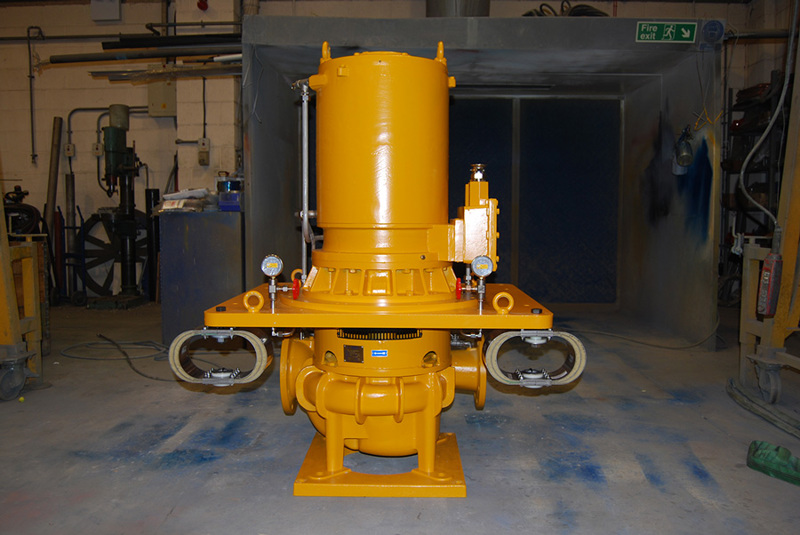
Hydraulic performance is equally duty-specific. Flow, head, efficiency, suction performance, and operating range depend on the selected pump family and duty point. Low NPSH characteristics and energy-efficient operation may be available where the hydraulic design and operating conditions support them, but these are not automatic consequences of shock qualification alone. A pump can be shock-qualified for a defined configuration without every hydraulic variant sharing the same suction performance or efficiency level.
System integration is often a major design consideration on naval vessels, where machinery spaces are compact and interfaces are tightly controlled. DESMI supports integration work related to footprint, nozzle orientation, motor arrangement, maintenance access, pipe routing, electrical interfaces, and overall installation constraints. This helps ensure that the selected configuration fits the available envelope while maintaining alignment with the approved technical basis for both hydraulic duty and shock performance.
Standards, shock testing, and naval qualification
Selected DESMI pump and motor configurations can be engineered and tested against defined naval shock and vibration requirements. Where applicable, this may include designs tested to MIL-S-901D, as well as project-specific vibration, endurance, structural integrity, and installation requirements. The applicable standard, edition, test method, level, mounting arrangement, and acceptance criteria must always be tied to the actual equipment scope and procurement requirement.
In defense projects, wording matters. “Tested to” means a defined configuration has undergone a specified test program. “Supplied in accordance with” means the delivered equipment and documentation follow an agreed requirement set. “Designed to meet” means the configuration is engineered to satisfy the requirement basis but may not imply completed testing unless that is specifically documented. These terms are not interchangeable, and DESMI uses qualification language that reflects the actual project scope.
Project requirements may also involve marine class or naval authority criteria. Depending on vessel type and contract scope, selected configurations can be supplied in accordance with requirements associated with organizations such as ABS, DNV, or Lloyd’s Register. Class approval or compliance should never be assumed to be automatic across product families. It depends on vessel type, flag, class notation, onboard system function, and the exact specification issued by the yard, navy, or procurement authority.
Qualification principle: shock rating applies to the defined pump arrangement that has been engineered, reviewed, and, where required, tested for the stated duty and installation scope. Any claim should therefore refer to the exact configuration, documentation package, and acceptance basis.
Proven Global Installations and Project References
DESMI shock rated pumps have been supplied for numerous naval programmes across Europe and allied fleets, including ship classes for the UK Royal Navy and other NATO customers. The pumps have demonstrated stable operation after shock testing and real-world deployments, confirming reliability in scenarios such as engine room cooling systems, firefighting and fuel delivery under combat readiness standards. These references testify to DESMI’s capability to produce pumps that comply with strict defence procurement criteria and to provide long-term operational security in critical marine systems.


FAQ: Shock rated pumps, standards, applications, and maintenance
What are shock rated pumps?
Shock rated pumps are defined pump-and-motor configurations engineered and, where required, tested to remain operational during and after specified mechanical shock conditions. The rating applies to the exact configuration and test scope, not automatically to every pump model or installation.
Which standards apply to shock rated pumps?
MIL-S-901D is a key naval shock-testing reference where applicable. Depending on the project, additional requirements may include naval vibration criteria, structural verification, and class-related requirements associated with ABS, DNV, or Lloyd’s Register. The relevant standard, test level, and acceptance criteria must be confirmed for the specific vessel and duty.
Where are shock rated pumps used?
Shock rated pumps are used on naval surface vessels, submarines, auxiliary vessels, and support platforms. Typical duties include fuel transfer, lube oil service, bilge, ballast, cooling water, fire-fighting, priming water, washdown, and other mission-critical shipboard systems where loss of pumping capacity could affect safety, survivability, or readiness.
How do shock rated pumps differ from standard marine pumps?
Standard marine pumps are designed for normal marine service conditions and shipboard operation. Shock rated pumps are additionally documented and verified for defined shock loads as a complete installed arrangement, including the pump, motor, coupling, mounting arrangement, and interfaces. The difference lies in the verified configuration and acceptance basis.
What maintenance and testing do shock rated pumps require?
Requirements depend on the pump type, application, and approved configuration. Typical activities include inspection of seals, bearings, couplings, alignment, supports, fasteners, vibration levels, leakage, and overall operating performance. After major repair, relocation, abnormal shock exposure, or modification to the installation, engineering review and possibly re-testing may be needed. Traceable records should be maintained throughout the equipment lifecycle.


