
Methanol Pumps
Methanol pumps are a critical part of safe marine fuel handling, where fuel supply, transfer and bunkering must be managed with a high degree of containment and operational reliability. DESMI supports methanol-fuelled vessel projects with pump solutions developed for hazardous liquid duties, including seal-less, magnetically driven pumps and selected deepwell configurations. The focus is practical and engineering-led: preventing leakage, supporting stable operation, simplifying maintenance and integrating the pump correctly into the wider methanol fuel system.
For shipowners, yards, system integrators and technical managers, the choice of methanol pump is not only about hydraulic performance. It is also about the safe handling of a toxic and environmentally sensitive fuel, compatibility with marine layouts, service access and documentation for class and flag review. DESMI brings long-standing pump expertise to these requirements through marine-oriented solutions and technical support across the project lifecycle.
Methanol Pumps for Safe Marine Fuel Handling
DESMI’s methanol pump offering is centred on the safe handling of methanol in marine fuel systems, where leak prevention, reliability and low maintenance are key design priorities. In these applications, a methanol fuel pump must do more than move liquid from one point to another. It must also support hazardous fuel containment, fit into compact engine-room or fuel-preparation spaces, and operate consistently under variable vessel conditions.
Typical duties include methanol fuel supply to engines, transfer between tanks or system stages, bunkering operations, and auxiliary pump tasks within alternative marine fuel systems. Depending on the installation concept, DESMI can support both magnetically driven methanol transfer pump duties and deepwell-based arrangements, where service access, installation constraints or tank-related requirements make that approach more suitable.
For operators developing new low-flashpoint or alternative fuel systems, DESMI’s marine pump portfolio also connects with broader solution areas, including dedicated solutions for LNG Pumps, LPG Pumps, LEG Pumps and Ammonia Pumps, alongside marine fuel transition topics covered in decarbonising the global maritime industry. Methanol handling is part of a wider shift in vessel fuel architecture, where operators increasingly seek common approaches across multiple alternative fuels.
For operators developing new low-flashpoint or alternative fuel systems, DESMI’s marine pump portfolio also connects with broader solution areas, such as marine fuel transition topics covered in , where methanol handling is part of a wider shift in vessel fuel architecture.
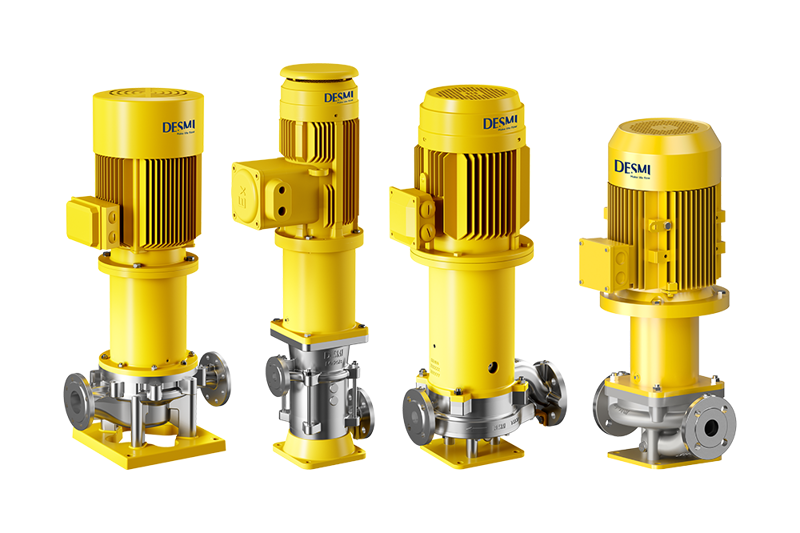
Magnetically Driven Methanol Pumps for Leak-Free Operation
Where methanol containment is a primary design requirement, a magnetically driven pump is often the preferred solution. DESMI’s magnetic-drive technology is based on 100% seal-less construction, which removes the dynamic mechanical seal that is commonly one of the main leakage points in conventional pump designs. For methanol service, this is highly relevant because the liquid is both toxic and flammable, and system designers aim to minimise any possibility of release into the machinery space or surrounding environment.
In a seal-less mag-drive pump, torque is transmitted magnetically from the motor side to the liquid end without a direct shaft penetration through the casing. This creates a closed hydraulic envelope that supports leak-free handling in duties where liquid or gaseous leakage is not acceptable. For marine methanol systems, that design principle supports safer containment and lower seal-related maintenance requirements.
Additional operational advantages come from the simplified rotating assembly. With no mechanical seal and fewer wear-related components, a magnetically driven methanol pump can help reduce service interventions and improve uptime. Lower friction and reduced noise are also relevant benefits in marine installations, where continuous operation and space constraints place added importance on reliability and maintainability.
DESMI’s published magnetic-drive range for hazardous liquid duties includes capacities up to 90 m³/h, speeds up to 1750 rpm and differential pressure up to 16 bar, depending on the selected configuration and duty point. This makes the technology relevant for a range of methanol supply and transfer applications within marine fuel systems. For related product information, see magnetically driven centrifugal pumps.
Applications for Methanol Fuel Supply, Transfer and Bunkering
A methanol pump can serve several functions on a methanol-fuelled vessel, and the duty profile has a direct impact on pump selection. In engine fuel supply systems, the pump must deliver stable flow and pressure to downstream equipment while supporting the overall safety philosophy of the fuel train. In transfer applications, the main objective is the dependable movement of methanol between tanks, treatment stages or service modules without compromising containment.
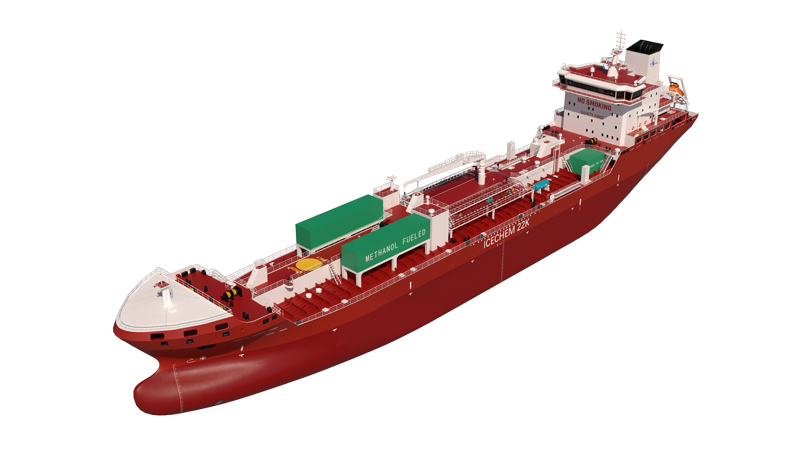
Typical marine applications include:
-
Engine fuel supply systems for methanol-fuelled propulsion or auxiliary engines
-
Methanol transfer pump duties between storage, service and conditioning sections
-
Bunkering operations where controlled and secure fuel transfer is required
-
Booster pump functions within the fuel supply architecture
-
Draining, circulation and auxiliary handling tasks linked to the methanol system
Bunkering is a particularly critical use case because it combines fuel transfer, procedural safety and operational control. Here, pump selection must support the full transfer concept, including shut-down logic, piping design, instrumentation and containment arrangements. In these systems, the pump is one component in a wider, risk-managed bunkering setup rather than a standalone item.
DESMI also supports specialised marine pump duties across fuel-related systems, including broader alternative fuel pump applications for methanol and ammonia.
Why Choose Methanol Pumps with Seal-Less Design
For shipowners, yards and marine technical teams, the value of a seal-less methanol pump is closely tied to risk reduction and operational continuity. Methanol handling places stricter demands on containment than many conventional marine liquids, so the reduction of potential leak paths is a practical and commercial advantage. A seal-less design addresses this directly by eliminating the seal arrangement that often requires monitoring, adjustment or replacement in traditional pump constructions.
The main operational benefits typically include:
-
Enhanced safety - reduced risk of hazardous liquid escaping from the pump
-
Lower maintenance demand - fewer seal-related service tasks and fewer wear points
-
Improved reliability - simplified construction can support stable long-term operation
-
Reduced downtime - less frequent intervention can improve system availability
-
Quieter operation - beneficial in machinery spaces where acoustic comfort matters
-
Environmental protection - lower leakage risk supports cleaner marine operation
-
Optimised total cost of ownership - lower maintenance and better uptime can improve lifecycle economics
These advantages are especially relevant in marine fuel systems that run continuously, operate under class-approved safety concepts and require predictable maintenance planning. For procurement and project teams, this means the methanol fuel pump should be assessed not only on purchase price, but also on service intervals, spare parts demand, failure risk and how easily the pump fits into the vessel’s long-term operating model.


Technical Design Considerations for Marine Methanol Pump Systems
Specifying a methanol pump for marine duty requires a system-level approach. Flow, pressure and temperature must be matched to the operating duty, but that is only the starting point. The pump must also be selected in relation to the full fuel system architecture, including piping concept, containment philosophy, materials, redundancy requirements and service access.
Key engineering considerations typically include:
-
Required flow rate and differential pressure at the actual operating point
-
Material compatibility with methanol and associated fuel system media
-
Integration with double-walled piping and hazardous area design principles
-
Redundancy philosophy for critical fuel supply functions
-
Available installation space and orientation constraints
-
Accessibility for inspection, maintenance and replacement activities
-
Interface with control systems, monitoring and shut-down logic
-
Expected operating profile, including continuous, intermittent or bunkering service
Material selection is particularly important because methanol can place strict demands on wetted components, elastomers and system details. Accessibility is equally important on board, especially where compact layouts make service work more time-consuming. In some cases, this is where a deepwell arrangement becomes attractive compared with a compact mag-drive unit. In others, the seal-less magnetic-drive concept is clearly the best fit because containment takes priority and the installation supports that configuration well.
Illustration of pumps in the methanol fuel supply system

Compliance, Documentation and Hazardous Fuel Handling Requirements
Methanol fuel systems for ships must be developed within a structured safety and compliance framework. Pump selection therefore needs to align with IMO-related requirements for ships using methyl or ethyl alcohol as fuel, as well as the expectations of class societies, flag administrations and project-specific approval bodies. For bunkering duties, ISO-aligned practices and procedural requirements are increasingly important in defining transfer concepts, safety barriers and operational controls.
When describing compliance, it is important to evaluate the pump as part of the full fuel-handling system. A methanol pump alone does not define compliance; it contributes to it through its design, materials, performance data, containment concept and documentation package. Depending on the project, DESMI solutions can be supplied in accordance with relevant marine project requirements and reviewed against the technical conditions of the intended installation.
Typical documentation and review items include:
-
Technical datasheets and performance curves
-
Material specifications for wetted and pressure-containing components
-
Dimensional drawings and integration information
-
Risk-assessment input for hazardous fuel handling
-
Information supporting bunkering procedures and operating philosophy
-
Test data and quality documentation relevant to the project scope
-
Class and flag submission material where required
For marine methanol applications, good documentation is not an administrative extra. It is part of safe engineering practice, supports approval workflows and helps operators maintain consistency from design through installation and operation.
Lifecycle Support for DESMI Methanol Pumps
Methanol fuel systems need support beyond the initial pump selection. DESMI provides engineering guidance throughout the lifecycle of the pump system, from specification and layout review to installation, commissioning and in-service support. This is particularly important in methanol projects, where the interaction between pump design, safety requirements and marine integration must be understood in detail.
Support can include:
-
Technical clarification during design and procurement
-
Guidance on pump selection and system fit
-
Installation support for correct integration into marine fuel systems
-
Commissioning assistance and operational start-up review
-
Spare parts supply and maintenance planning
-
Service support through DESMI’s global network
With sales, service and partners in more than 100 countries, DESMI supports vessel operators and shipyards that need both project-phase responsiveness and long-term aftermarket continuity. Access to technical documentation, product data and engineering dialogue helps reduce uncertainty and keeps the pump system aligned with operational requirements throughout its service life. You can also explore DESMI service and support for broader lifecycle assistance.
Frequently Asked Questions about Methanol Pumps
What is a methanol pump used for in marine fuel systems?
A methanol pump is used for fuel supply, transfer, bunkering and related auxiliary duties on methanol-fuelled vessels. Typical tasks include supplying methanol to engine fuel systems, transferring fuel between tanks or modules, and supporting controlled bunkering operations.
Why choose a seal-less magnetic-drive methanol pump?
A seal-less magnetic-drive pump removes the mechanical seal as a potential leakage path. This supports safer handling of toxic and environmentally sensitive liquids such as methanol and can also reduce seal-related maintenance and downtime.
Is a magnetically driven pump suitable for both transfer and bunkering?
In many cases, yes. Suitability depends on the specific duty point, system design, operating philosophy and approval requirements. The pump must be assessed as part of the full methanol handling system rather than as an isolated component.
When should a deepwell pump be considered instead of a mag-drive pump?
A deepwell pump is often considered when tank arrangement, installation geometry, service access or system flexibility make that configuration more practical. The decision depends on the vessel layout and the long-term maintenance strategy.
What documentation is typically required for a methanol fuel pump?
Projects commonly require performance data, material specifications, dimensional drawings, integration details and documentation supporting risk assessment and class or flag review. The exact package depends on the vessel, yard requirements and application.
Are cryogenic pumps relevant to methanol service?
Usually not in the same way as for LNG or other very low-temperature fuels. Methanol duties are generally specified around marine hazardous liquid handling, containment, compatibility and fuel system integration rather than cryogenic pump design.


